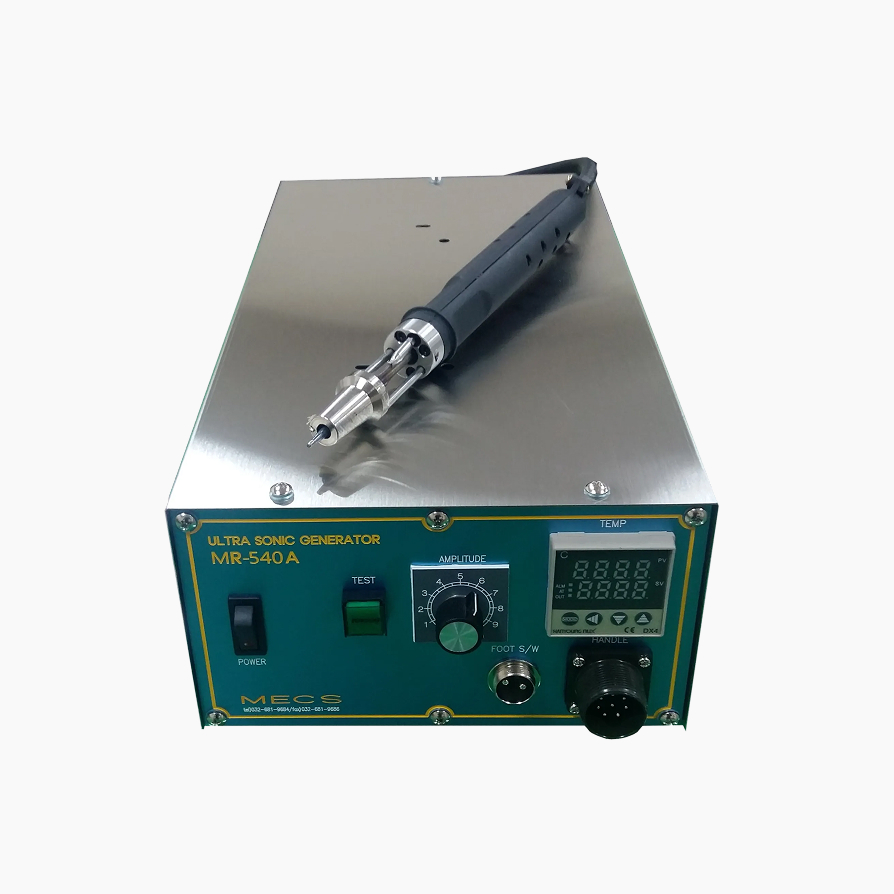
Ultrasonic soldering is an environmentally friendly joining technology that enables direct metal bonding without the use of flux by removing surface oxides through ultrasonic vibration. It is a method in which high-frequency mechanical vibrations in the ultrasonic frequency range generate cavitation in the molten solder, removing oxide layers from the metal surface and thereby enabling soldering. As a result, clean joints are formed without flux residue, enabling stable and reliable ultrasonic soldering between dissimilar metals such as aluminum and copper, with excellent electrical and mechanical performance.
Ultrasonic soldering is widely applied to metal wire, terminal, and PCB joining processes across industries including electronics and electrical equipment, motors, home appliances, automotive, and industrial power systems. It is particularly suitable for eco-friendly manufacturing where flux usage is restricted, high-reliability electronic modules, and components requiring high heat resistance and electrical conductivity. Compared to conventional thermal soldering, the process operates at lower temperatures and shorter cycle times, minimizing component damage and preventing galvanic corrosion while improving electrical reliability.

Cooling fan motors (microwave ovens), BLDC motors (dishwashers, air conditioners, washing machines, large HVAC systems), Drain pump motors (washing machines), Reactors (air conditioners, washing machines, refrigerators)

Clutch coils (automotive air conditioner compressors): Aluminum wire & copper terminals

Transformers (forklift battery chargers), Capacitors, Inductors / chokes (UPS systems), Solenoid coils (inductors), Coil inductors

External Electrode Fluorescent Lamps (EEFL for LCD TV backlight units), Superconducting wires for MRI equipment
Sealing of laser amplifiers for communication equipment, Formation of tin busbars for solar cell modules
MECSTECH Co., Ltd. (hereinafter referred to as the “Company”) is fully committed to protecting the personal information of its customers and complies with the Information and Communications Network Act (hereinafter referred to as the “Network Act”), the Personal Information Protection Act, and other relevant laws and government guidelines.
In accordance with Article 27-2 of the Network Act, the Company establishes and discloses this Privacy Policy by posting it at its business premises and providing a link on the main page of the MECSTECH website (https://www.mecstech.com/main.php). This ensures that customers can easily review the measures taken by the Company to protect their personal information at any time.
This Privacy Policy may be amended due to changes in applicable laws, regulations, or internal operating policies. In the event of any amendment, the Company shall promptly notify customers of the reasons for and details of such changes via the Company website or at its business premises.
The Company destroys personal information without delay once the purpose of collection is achieved. However, certain information is retained as required by law:
Destruction Methods:
Note: Inactive accounts (no activity for a specific period) will be managed in accordance with the “Personal Information Validity Period” under the Network Act.
The Company implements the following security measures:
The Company’s website may contain links to third-party websites. The Company is not responsible for the privacy practices or content of such external sites. Users are encouraged to review the privacy policies of any linked websites they visit.
We value your feedback. For inquiries or complaints regarding personal information, please contact:
The Company has designated the following officers to protect customer information and handle related grievances:
This Privacy Policy was established on May 1, 2023. Any changes due to legal or security updates will be notified via the Company’s website prior to the effective date.
Effective Date: May 1, 2023