
What Is an Ultrasonic Food Cutting Machine?
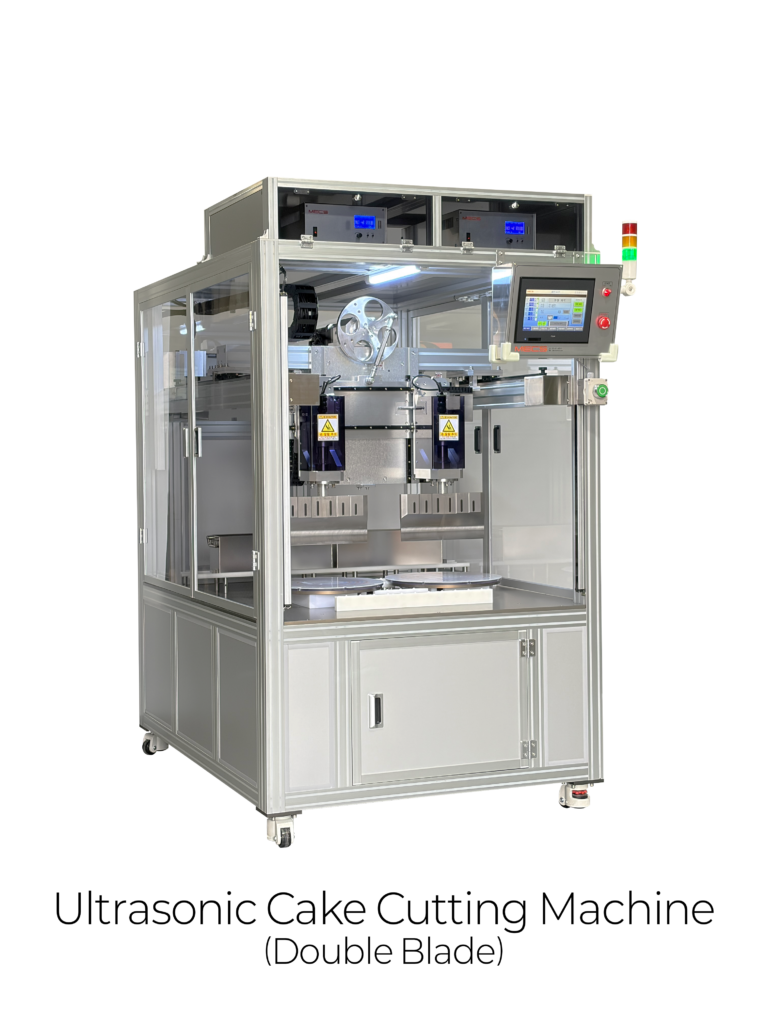
In the food processing industry, even a single cutting process can significantly impact product quality.
Especially for equipment such as cake cutters and cheese cutting machines, both cut surface quality and productivity must be achieved simultaneously.
However, conventional food cutting machines often face limitations such as:
- Cream smearing
- Crumb generation
- Product deformation
To overcome these issues, the Ultrasonic Food Cutting Machine has become a key solution.
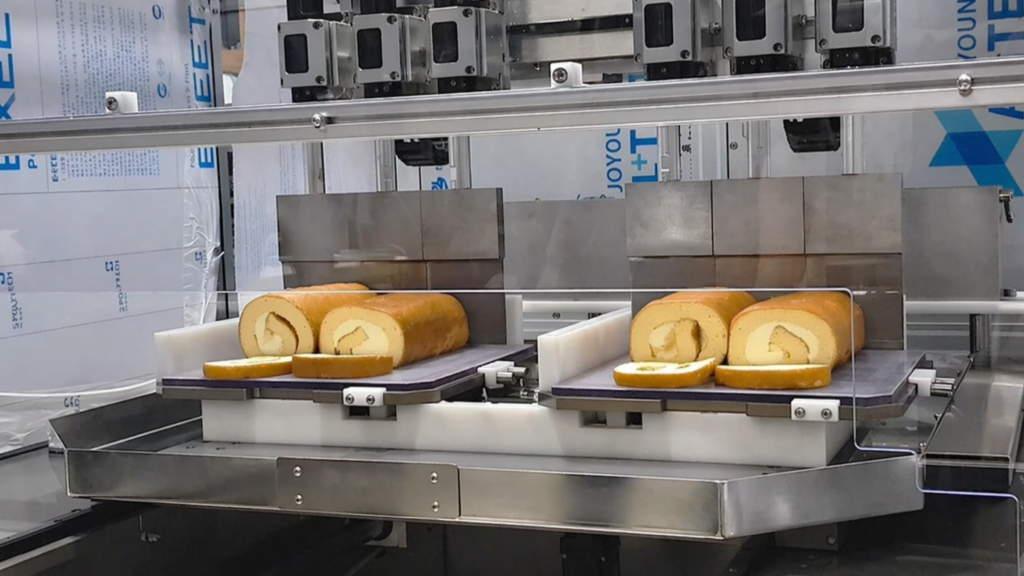
Ultrasonic cutting uses high-frequency micro-vibrations to minimize friction and deliver clean, precise cuts across a wide range of food products.


How Ultrasonic Food Cutting Works
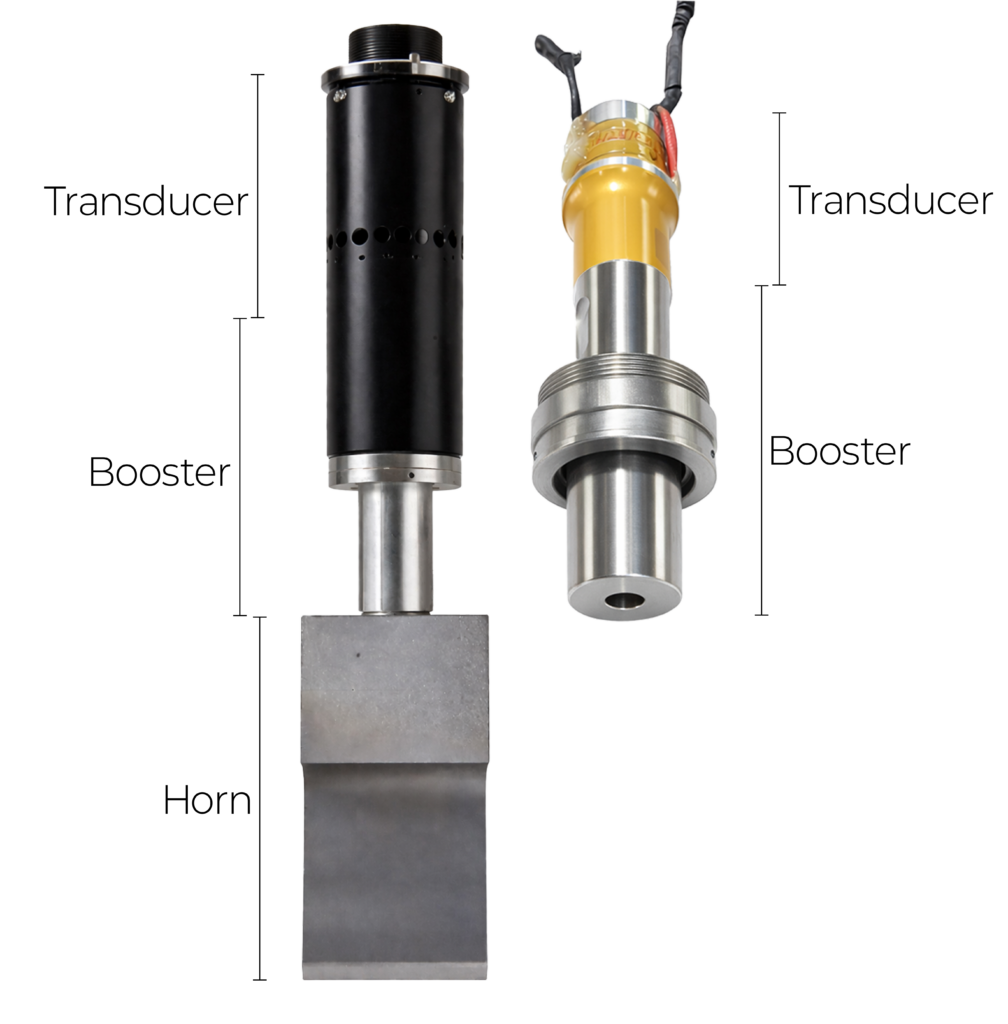
An ultrasonic cutting system typically consists of:
- Ultrasonic Generator
- Transducer
- Booster
- Horn (Cutting Blade)
The process works as follows:
- The horn (blade) contacts the food
- Ultrasonic vibration is transmitted (20kHz or higher)
- Friction at the contact surface is reduced
- Material resistance decreases → cutting occurs
- A clean and uniform cut surface is formed
This mechanism allows Ultrasonic Food Cutters to achieve high precision with minimal deformation.
5 Reasons Why Ultrasonic Food Cutting Machines Are Essential
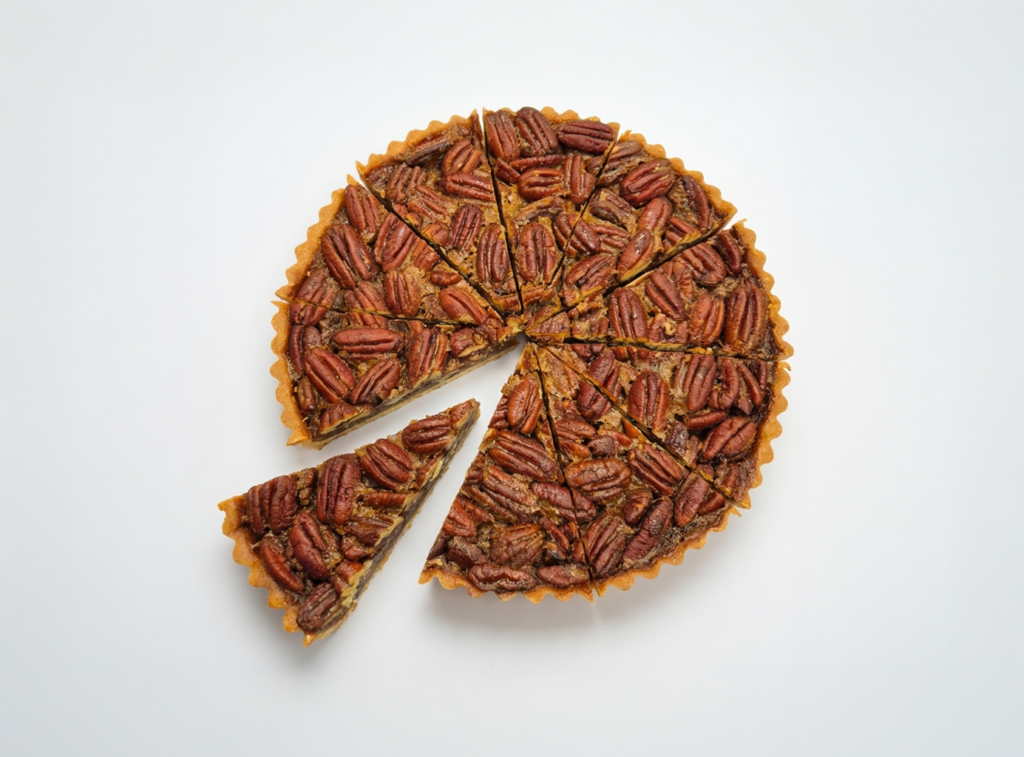
1. Clean, Crumb-Free Cutting Surface
Unlike conventional food cutting machines, ultrasonic systems provide smooth, uniform cutting results.
This makes them ideal for Ultrasonic Cake Cutting Machine applications and delicate bakery products.
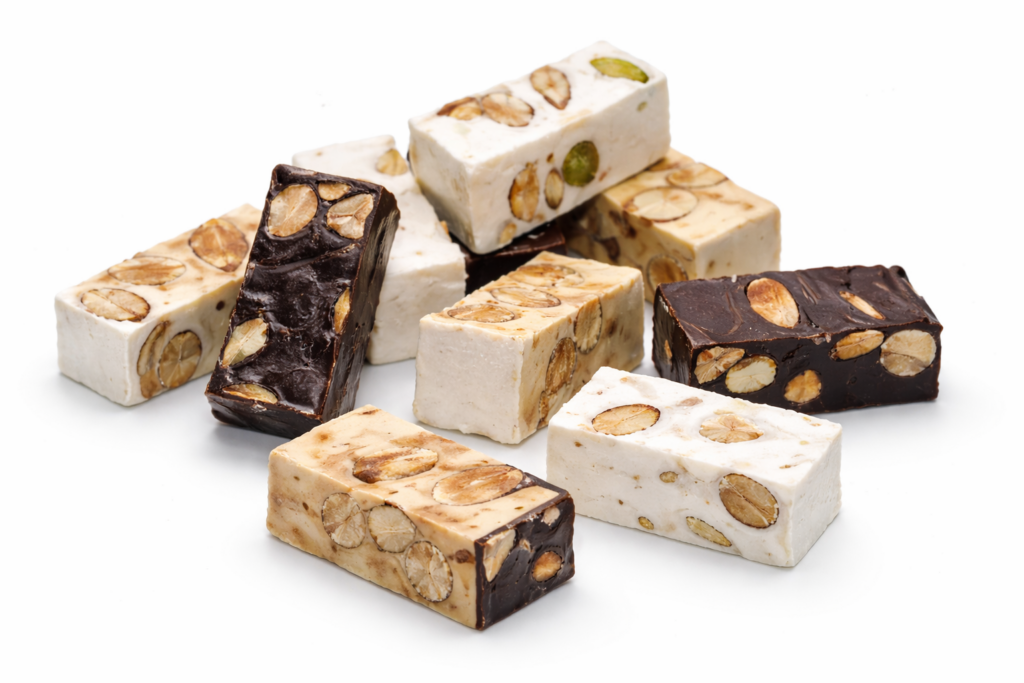
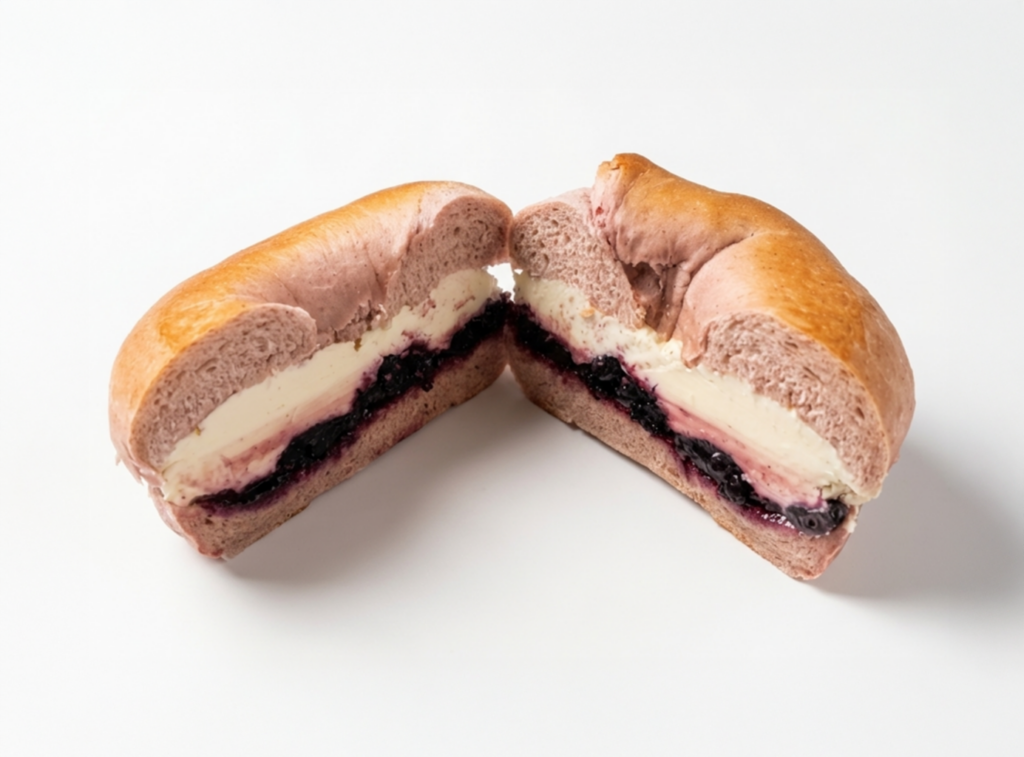
2. Non-Stick Cutting for Sticky Foods
Sticky products such as cream cakes, nougat, and caramel often adhere to blades.
Ultrasonic vibration minimizes contact, making Ultrasonic Food Cutting Machines highly effective for non-stick cutting.
3. Minimal Product Deformation
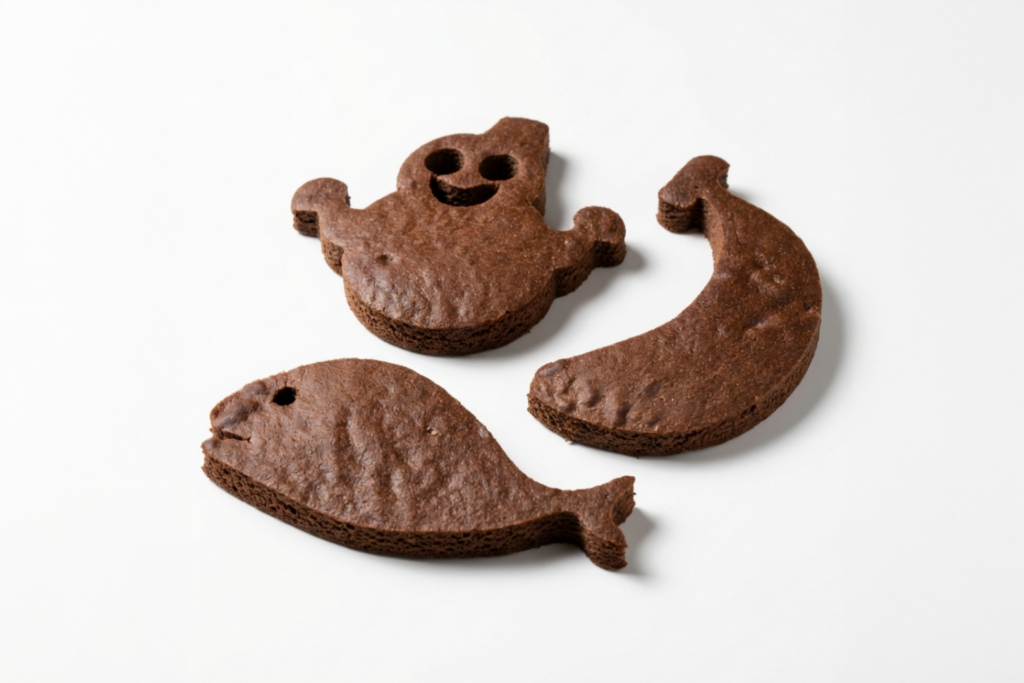
Traditional cutting applies pressure that can deform products.
Ultrasonic cutting uses low pressure, preserving product shape and appearance.
4. Ideal for Food Cutting Automation Systems
Ultrasonic cutting solutions can be easily integrated into Food Cutting Automation Systems.
- Consistent product quality
- Reduced labor costs
- High-speed production
This makes them suitable for industrial-scale food manufacturing.
5. HACCP-Compliant Hygienic Process
Ultrasonic cutting supports hygienic food production environments by:
- Reducing particle generation
- Minimizing blade contamination
- Enabling easy cleaning
This makes it suitable for HACCP-compliant food processing lines.
Applications of Ultrasonic Food Cutting Machines
Ultrasonic cutting technology is widely used across multiple industries.
[Watch Ultrasonic Cutting Videos for Various Foods]
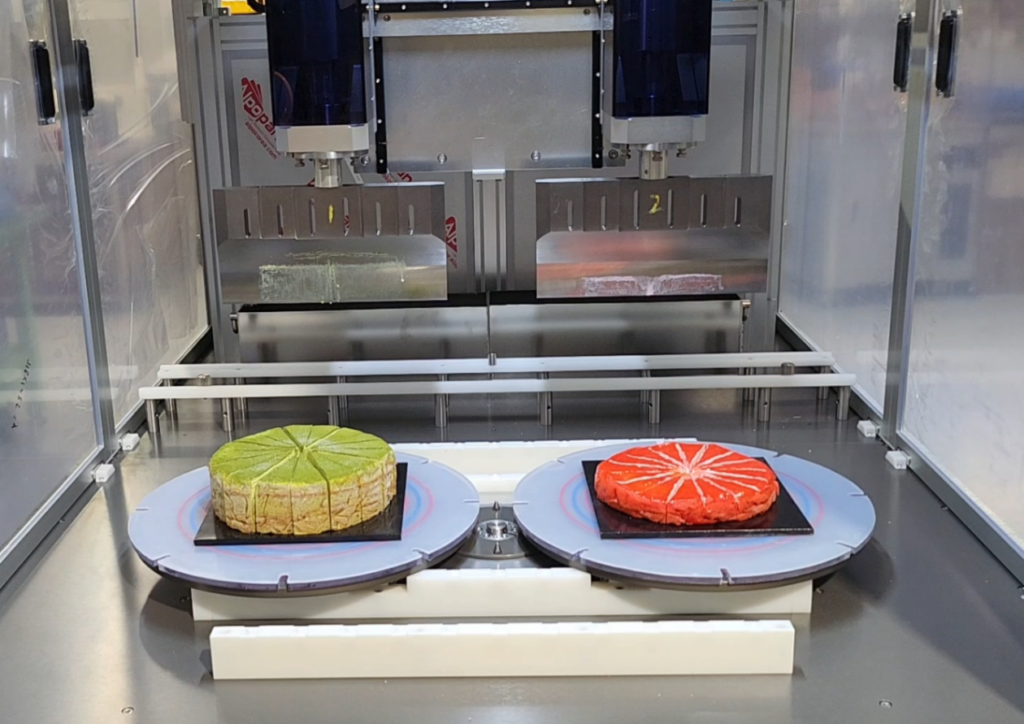
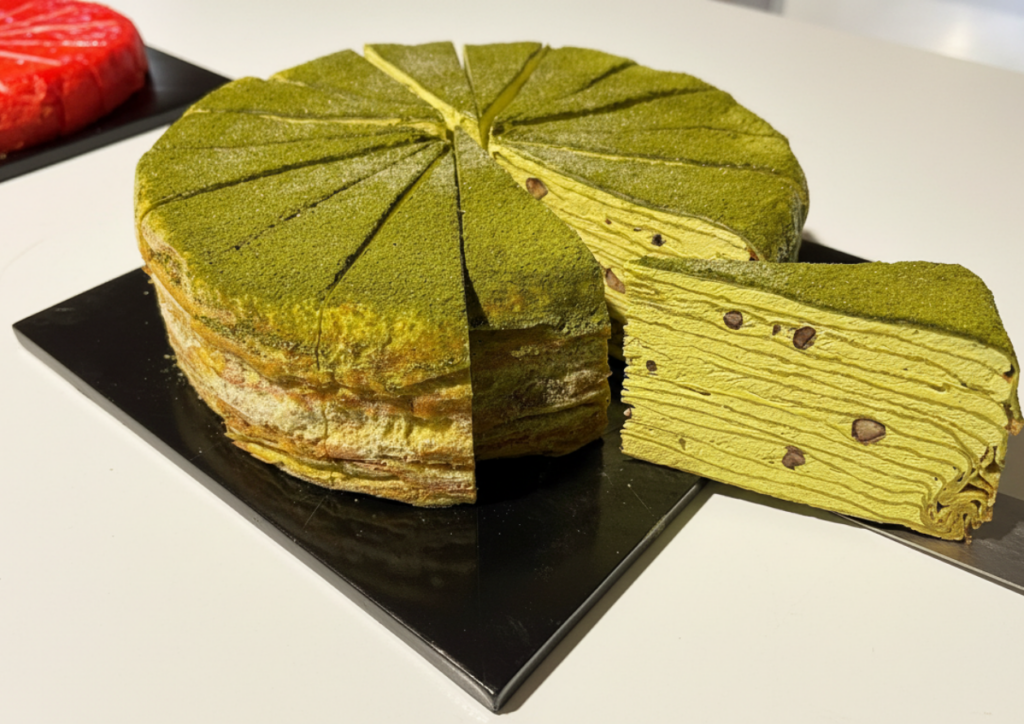
Bakery (Ultrasonic Cake Cutting Machine)
- Cream cakes
- Roll cakes
- Sponge cakes
- Chocolate products
Dairy (Ultrasonic Cheese Cutting)
- Sliced cheese
- Soft cheese
Ready-to-Eat Foods
- Sandwiches
- Burritos / wraps
- Pizza
Sticky & Soft Products
- Taffy
- Nougat
- Caramel
Conventional vs. Ultrasonic Food Cutting
| Category | Conventional Cutting | Ultrasonic Food Cutting Machine |
|---|---|---|
| Cutting Surface | Uneven | Highly uniform |
| Stickiness | Occurs | Minimal |
| Deformation | Occurs | Minimal |
| Hygiene | Moderate | Excellent |
| Productivity | Limited | High-speed |
MECSTECH Ultrasonic Food Cutting Solutions
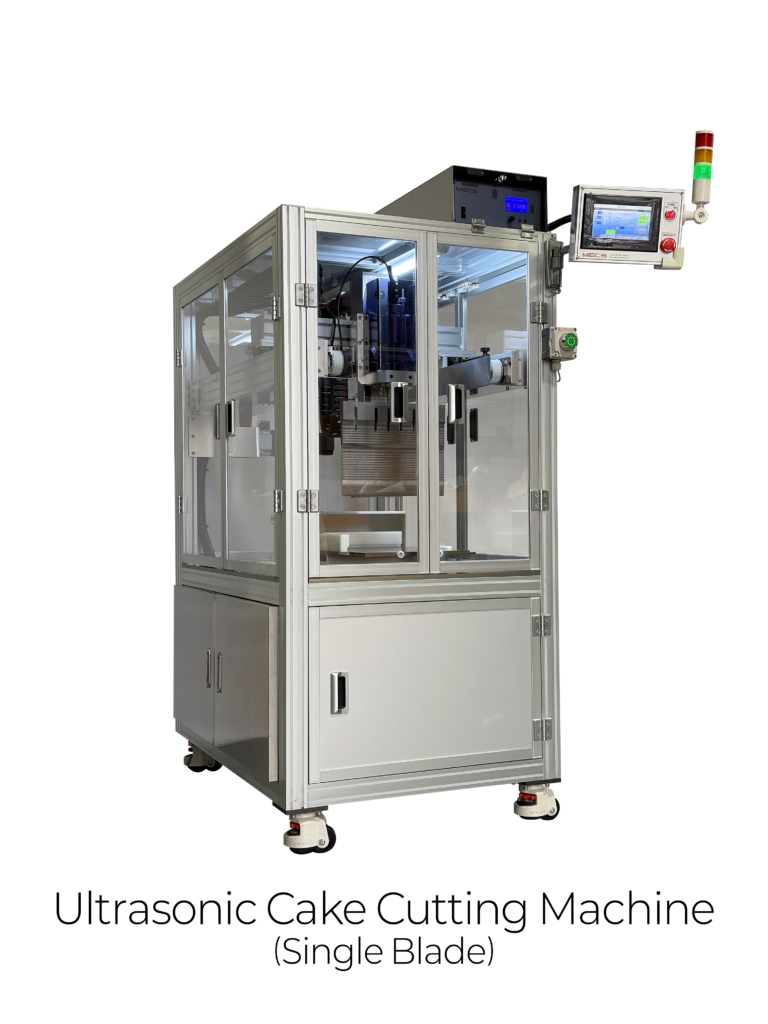
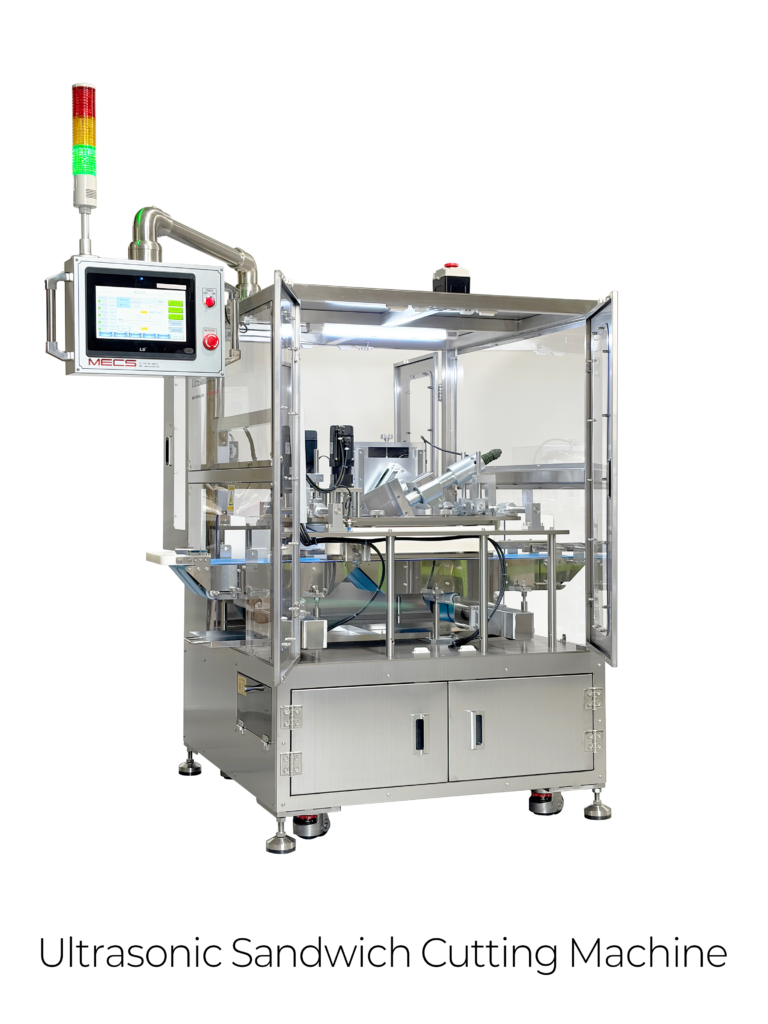
MECSTECH provides optimized Ultrasonic Food Cutting Machine solutions based on in-house development of core ultrasonic components.
The horn design plays a critical role in cutting performance, and MECSTECH manufactures:
- Transducers
- Boosters
- Horns
ensuring high durability and stable performance.
Additionally, our systems offer:
- Digital control systems
- Auto-tuning functionality
- Flexible cutting patterns
- Seamless integration into Food Cutting Automation Systems
These features allow customized solutions for each production line.
[Learn More About MECSTECH Ultrasonic Cutting Machines]
Key Considerations for Ultrasonic Food Cutting Systems
1. Food Characteristics
Different foods require different cutting conditions depending on:
- Stickiness
- Moisture content
- Elasticity
For example:
- Cream cakes, nougat → high stickiness
- Bread, sponge cakes → sensitive to deformation
Proper horn design and frequency settings are essential.
2. Production Volume & Automation
Ultrasonic cutting can be applied from small-scale production to full Food Cutting Automation Systems.
System configuration depends on:
- Automated production lines
- Manual operation

3. Hygiene & HACCP Compliance
Although ultrasonic cutting reduces contamination risks,
hygiene performance depends on material quality and structural design.
It is important to ensure the system is suitable for HACCP food processing environments.
4. Core Component Technology
Performance depends heavily on:
- Transducer
- Booster
- Horn
Especially the horn, which directly affects cutting quality.
5. Sample Testing & Customization
Due to variations in food properties, testing is essential.
Key evaluation factors:
- Cutting quality
- Production speed
- Process compatibility
MECSTECH offers free sample testing tailored to customer products.
Samples can be sent via shipment or tested on-site, and optimal cutting conditions will be provided.
Conclusion
The Ultrasonic Food Cutting Machine is more than just cutting equipment.
It is a critical technology that improves both product quality and production efficiency.
It is widely used in:
- Ultrasonic Cake Cutting Machine applications
- Ultrasonic Cheese Cutting
- Ice cream and soft product cutting
- Food Cutting Automation Systems
As demand for automation and high-quality food production continues to grow,
ultrasonic cutting technology will play an increasingly important role in the industry.